
Introduction
Obstacle Avoidance Tips & Tools
Understanding Rider • Elephant • Path and incorporating it into your journey will help make changing the status quo easier. Ongoing, numerous, frequent culture conversations will help you see issues and make progress. Understanding and using artifacts will make the culture change path easier to traverse.
And yet, culture change means changing established, shared thought habits – that’s a journey that is just going to have a few hiccups. Here then are five Obstacle Avoidance Tips & Tools (OATTs) that will help you avoid possible obstacles on your culture change journey.
Using these OATTs to avoid obstacles will look different in different situations, but they generally help you in one of three ways:
- Take a completely different path. There are times obstacles simply won’t even show up because you’ll take path that avoids them completely. Culture conversations and awareness of where you are on the mood meter frequently contribute to this type of outcome.
- Nimbly maneuver around an emergent obstacle. In issue arises. A you looking at it with curiosity, in a positive state of mind, and from a viewpoint that you’ll first focus on your role in the situation and what you can do to have an impact? If so, then your odds of agilely advancing past it just went way up!
- Slowly walk away. If the path you chose for a hike through a dense forest leads you to come upon a moose cow & calf, then “nimbly maneuver around” is probably not a valid option – you likely need to just slowly back up to a different fork in the path. Recognizing such a situation and leading others back from the precipice probably takes all of the OATTs with an extra does of humility.
Let’s dig a bit deeper into each of the OATTs, one by one.
OATT #1
Culture conversations are critical because culture is (hidden) shared thinking.
 Culture change cannot be accomplished without culture conversations.
The characteristics of a culture conversation – humility & curiosity, ask>>tell, appreciate the gifts – allow them to create open space for thoughts to be shared and the hidden to be made visible.
In the Explore step culture conversations make the hidden visible, help address your blind spots, and prepare the congregation for a culture shift. In the Build step, culture conversations help form a new way of thinking, align and synchronize all the individual journeys, and provide an ongoing means to cultivate the new thinking through encouragement and appreciation.
OATT #2
As a leader, my mood matters.
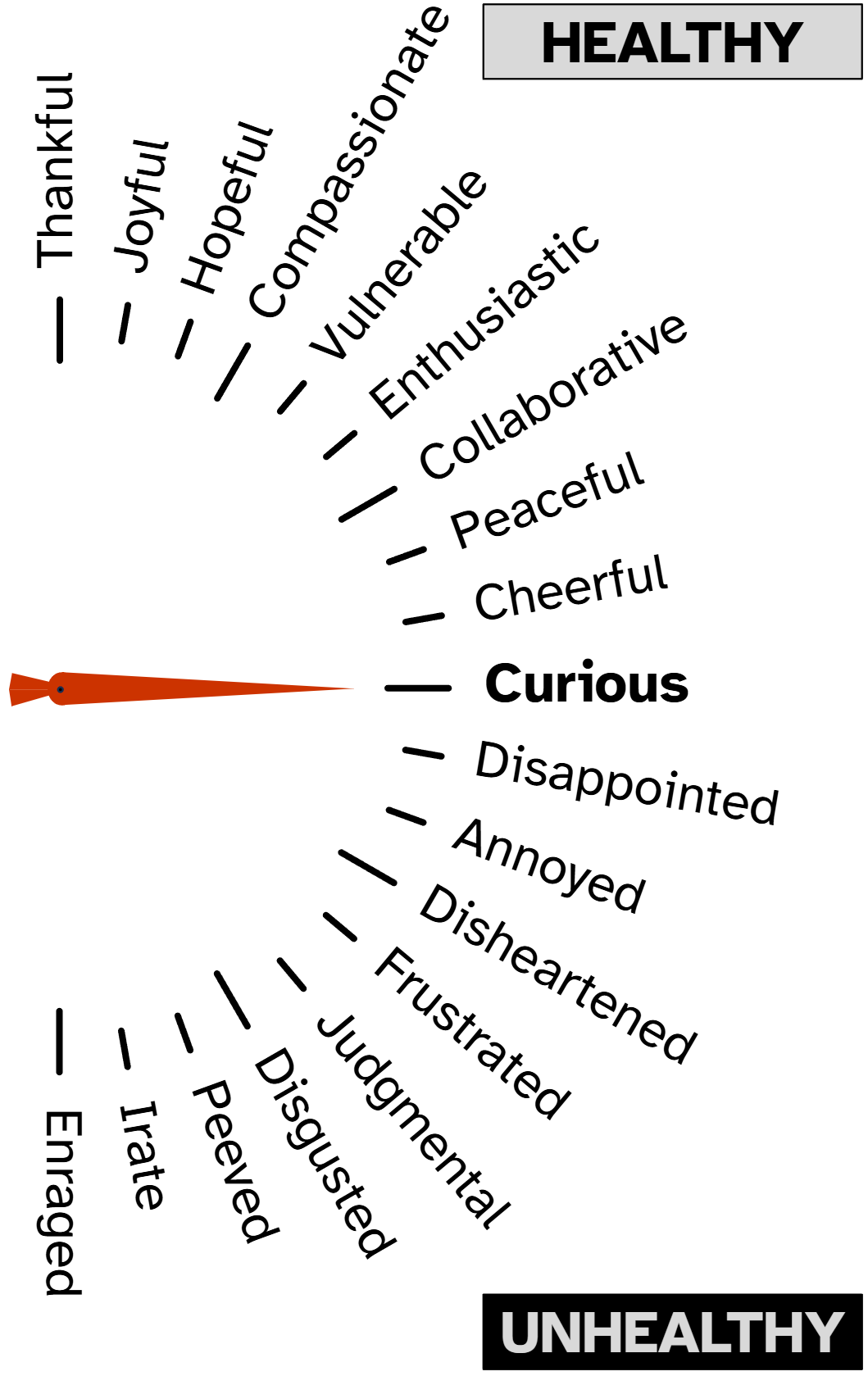
Oh, those mirror neurons! As leaders, our state of mind and mood are contagious, for better or worse. When you are in a healthy state of mind, not only are you a better leader and better equipped to handle any obstacle that may pop up during your culture journey, everyone else who is exposed to your mood is also better equipped to handle that obstacle. Talk about a force multiplier!! Being aware of your place on the mood meter helps you be aware of the quality of your own thinking, operate on the accountability ladder (not wallowing in the puddle) and influence others to do the same.
Every change – including culture change - is easier when you and the group you are leading from a healthy state of mind.
OATT #3
Curiosity is your superpower.
Curiosity is so important when you are leading a culture change journey.
Curiosity is a key characteristic of all culture conversations. It will allow you to address your blind spots and discover what others see that you do not.
It is your get out of jail card if you’re low on the mood meter. When an unexpected, not-what-you-were-hoping-for comment or behavior occurs, approaching it with curiosity will ensure that you are in a healthy state of mind, and fully understand the situation before helping others to perhaps reconsider their thinking.

OATT #4
Seeing my role is my starting point.
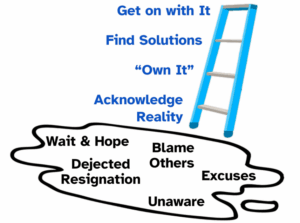 As a leader, whenever you encounter an obstacle during a culture journey, you need to operate from a point on the accountability ladder. Viewing issues from the ladder is a critical leadership shadow to cast – otherwise you’re promoting “playing in the puddle”.
The way to recognize if you are on the ladder or in the puddle is to consider your thoughts and speech. If you’re in the puddle, it may sound like this:
- Wait & Hope: Someone should take care of … | I hope someone does something about …
- Blame Others: “They” did (or did not) …
- Excuses: That won’t work | 1st we need…
- Dejected Resignation: There’s nothing we can do about it | That’s just the way it is
- Unaware: Whaddya mean? | Really? I had no idea that …
Regardless of where you are in the puddle, the common thread is a “not me” mindset. Because you are not looking at your role in addressing the issue, you have taken yourself off the field of play and made yourself powerless to impact the situation.
The problem for the group is that if a leader is thinking and acting this way, then those mirror neurons mean there is likely a whole crew playing in the puddle. That’s a recipe for nothing getting done and problems festering.
Operating from a point on the accountability ladder means seeing your role in the situation, staying on the field of play, and working to resolve the issue. Once again, modeling operating from the ladder means others will approach the challenge with the same mindset. That’s a recipe for issues getting addressed and moving forward.
Here’s the core challenge: we all play in the puddle sometimes.
Problems arise, things get behind, we get frustrated and impatient. In short, we end up low on the mood meter and in an unhealthy state of mind. And that means we will likely end up in the puddle.
Since we’re all going to dip low on the mood meter, what can we do to get out of the puddle? The key is to use our curiosity superpower yet again. Here’s the question to ask…
What can I do to impact this?
If you ask this with genuine curiosity, you’ll shift back up the mood meter, improve your state of mind & the quality of your thinking, and be ready to climb out of the puddle and back up onto the ladder. Another variant of this – “What can we do to impact this?” – is a way to help others use their curiosity and join you on the ladder.
OATT #5
Focus on what you can control and influence.
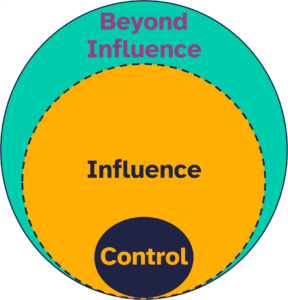 “Control the controllables” – it’s an old mantra meant to help you focus on where you can have a real impact. In reality, you have less things under your control than you might think. What you can control really comes down to yourself: your thoughts, your words, your actions, your choices etc. Fortunately, your ability to have an impact also includes those things that you can influence – others’ actions, choices, priorities. These two areas together are our field of impact.
Somethings, though, are outside our field of impact, beyond our influence - Complaining about the weather doesn’t impact it in any way. Focusing on stuff outside our field of impact is 100% wasted mental energy. But it is actually worse than that; if we are focused on items Beyond our Influence, where we are unable to have an impact, we are unlikely to see our role in the situation and are likely in the puddle and an unhealthy state of mind.
It is important to recognize it when we fall into this train of thought and break out of it, otherwise the next cycle on the thought loop, made while in an unhealthy state of mind, will likely again be from the puddle of powerlessness.
Asking “What can I do to impact this?” keeps us on the field of impact and helps us avoid this trap.
Note: Sometimes an item is beyond our influence in the present moment but can be in our field of impact for future occurrences. For example, far fewer folks show up for a culture summary presentation than you had hoped. In the moment, recognize “It is what it is.”, and give thanks for those who are present. After the presentation is the time to consider what you can do to impact the situation; to get this information out to others, to ensure more folks attend the next one, etc.
Culture Change as a Rubber Band
Culture change does not occur as a smooth shift; a more accurate view is culture being stretched as a rubber band and (hopefully) returning to form in a new location. Understanding this will help you use your OATTs, so let’s examine this a bit.
When you begin a culture change journey, you have a current set of behaviors; products of your current auto-pilot thinking. This is your From culture, shown below as the red distribution of behaviors. As part of your culture change journey, you’re looking to undergo a culture shift to a new way of thinking – your To culture goal – which will produce a new set of behaviors, shown below as the green distribution of behaviors.
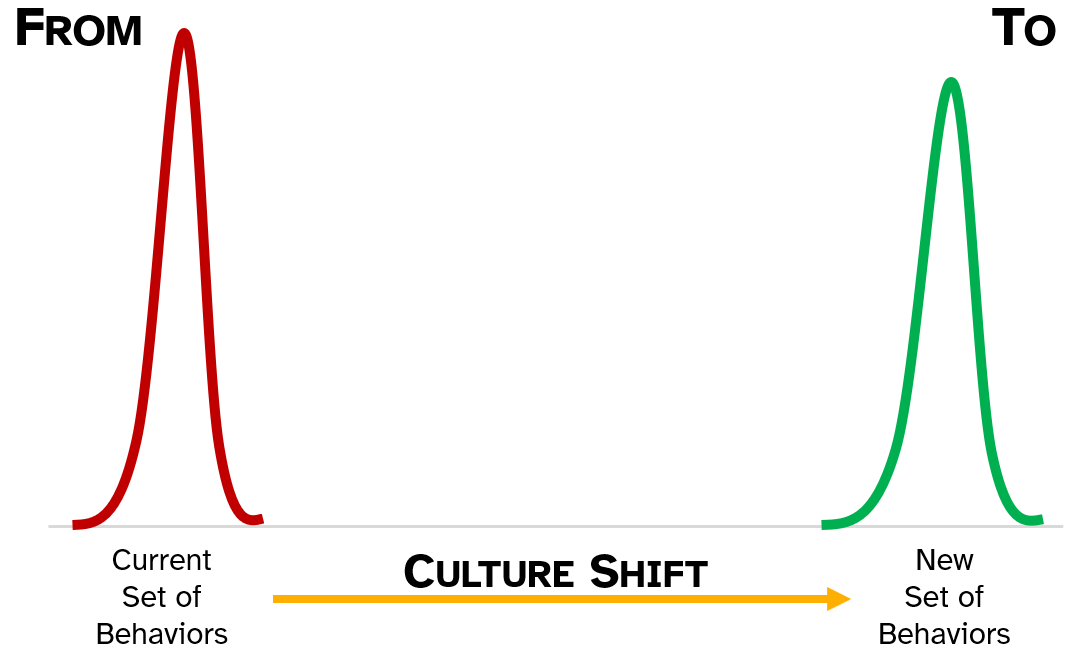
Perhaps you’re thinking that we’ll all just mosey on over to that To area, maintaining a congruent, consistent-within-the-group (the purple curve below), albeit changing set of behaviors. That’s not how it works.
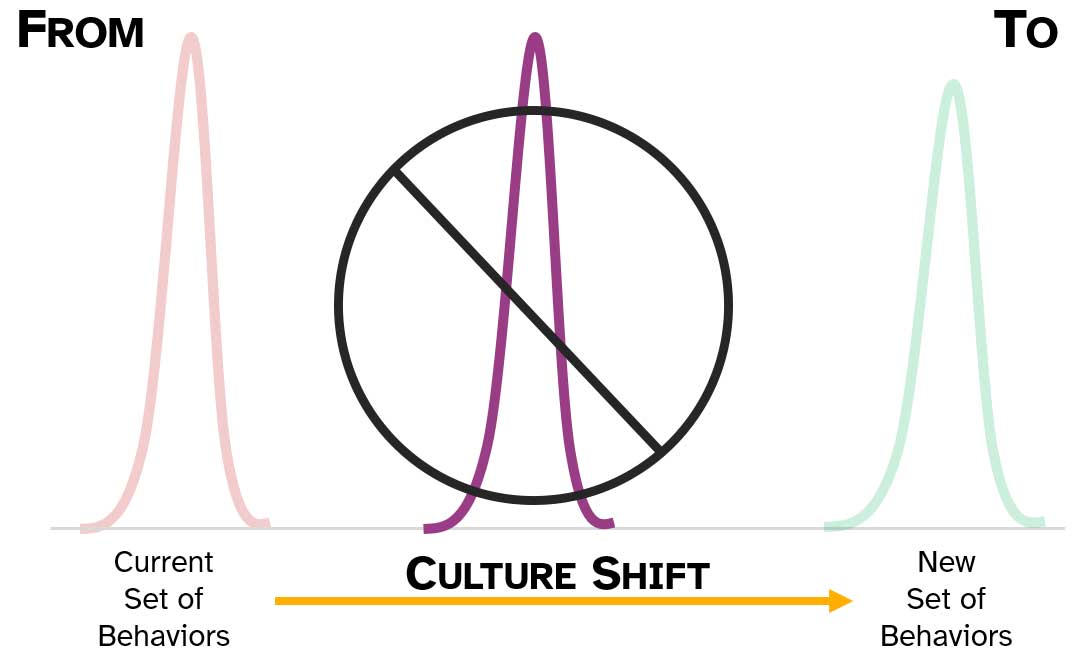
Remember, we said that culture is changed collectively, one person at a time. What are the odds that everyone just “poof” shifts uniformly and with the same lickety-split speed to this new way of being? Slim to none. Even with blazing clarity on how this From | To shift supports your purpose, well-defined Dos for Tos, and powerful artifacts, everyone is on their individual pace and path. It is messy.
Behaviors are going to run the spectrum between the From and To points, as if your culture was a rubber band being stretched between the two – like the blue line below. Folks are going to transition to some kind of intermediate state at their own individual pace. Eventually, if things go well, more and more people end up at To where the thinking that supports the new way of doing things is at habit strength.
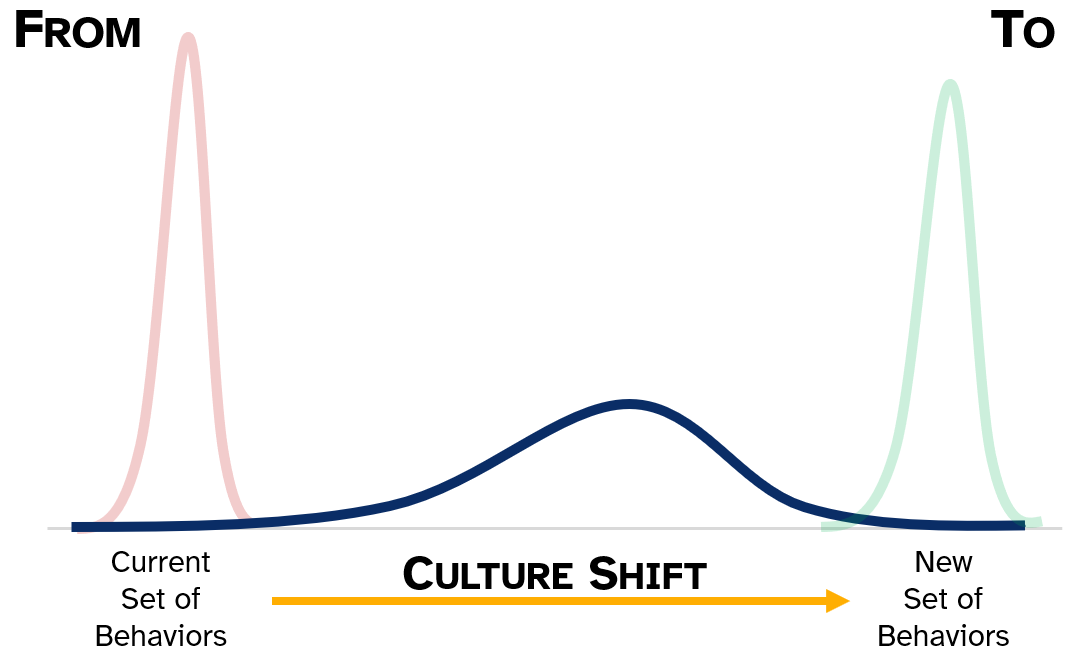
This rubber band stretch has all kinds of ramifications for OATTs application. For example, where do you focus most of your attention when the rubber band is stretched: Folks already at the To, folks in the middle, or folks still at the From? If you consider that where you give most of your attention is a form of framing (think yellow items on the collage), does it change your answer? Let’s consider the three groups TO | MIDDLE | FROM in view of the OATTs:
- My mood matters. What group puts you high on the mood meter? How is that beneficial for those you are leading?
- Seeing my role is my starting point. The goal is to help others get to the To. What can you do to impact this? The answer is to help others find a solution they can imitate.
- Focus on what I can control and influence. What can you do to impact this? Your influence lies in “help them find their insight”, not “provide them a plug-and-play solution”; their self-discovery goes MUCH further in building the new thought habit.
- Curiosity is my superpower. Let your curiosity about the TO group fuel the curiosity of the MIDDLE and FROM groups – the TO is blazing the trail on the culture journey and they’ve oodles to give the rest of us on how to get there ourselves.
- Culture conversations are critical. The MIDDLE and FROM groups may be making a MASSIVE effort but just struggling. Culture conversations are where they get to use their curiosity to make the TO groups thinking visible, address blind spots, and do their own self-reflections on “What can I do to impact this?” to cultivate the new To thinking.
Conclusion
OATTs Help Deal with a Culture Change Journey’s Obstacles
You’ve decided that shifting an element of your congregation’s culture would be beneficial for your ministry. You’ve expended great energy and effort to involve others, and laying out the journey in a manner to make changing the status quo easier: blazing clarity on how the From | To shift supports your purpose, well-defined Dos for Tos, and powerful artifacts.
Yet the fact remains, culture is changed collectively, one person at a time. Culture change is journey that is likely to have a few obstacles – you are changing established, shared thought habits. Trust the process. Use the tools provided. Apply the Culture Change principles as you adjust the map for your individual congregation. And remember the OATTs – they will help you deal with possible obstacles on your culture change journey.